
The Corvette C2 convertible was built from 1963 to 1967 alongside the Sting Ray coupe, and in every one of those years more convertibles than coupes left the factory. It combined the new independent rear suspension of the C2 with a folding soft top stored under a body-colour lid, and buyers could also order a removable hardtop. Today it is one of the most sought-after classic Corvettes, with values driven by engine, originality and documentation.
In this guide
What makes the C2 convertible special
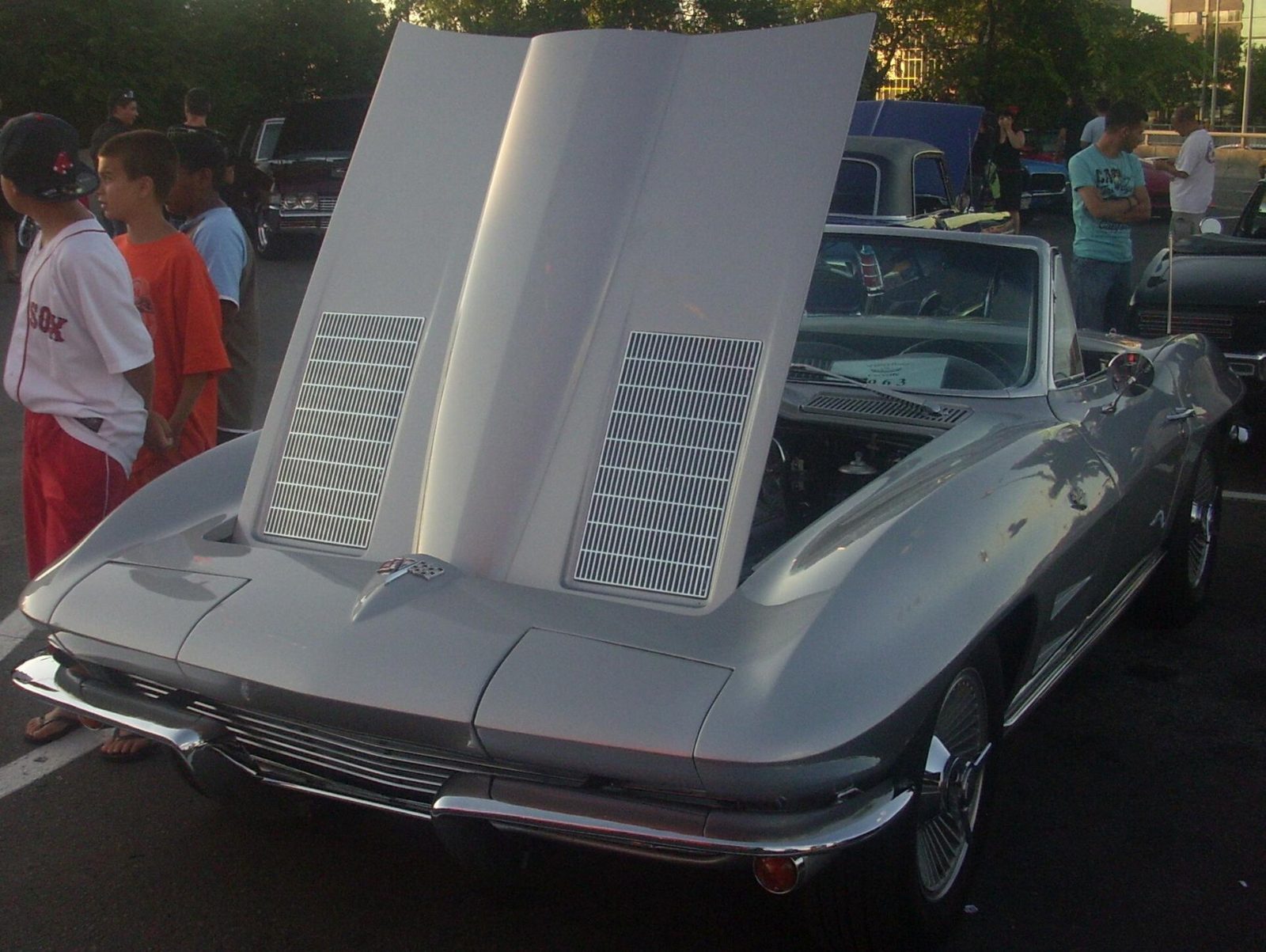
The C2 Sting Ray was a clean break from the C1. It had a new frame, independent rear suspension, hidden headlights and a sharper body inspired by Bill Mitchell’s Sting Ray racer. The coupe, especially the 1963 split-window, grabs headlines, but the convertible was the more popular choice when new. Open-top driving was still central to the Corvette’s image, and the convertible offered the same performance with a removable hardtop for cooler days.
Year-by-year highlights
- 1963: The C2 arrives with independent rear suspension and the 327 small-block in several outputs, including a fuel-injected version.
- 1964: Detail changes inside and out, including revised trim and less body noise.
- 1965: Four-wheel disc brakes become standard and the first big-block, the 396, appears for one year.
- 1966: The 427 big-block replaces the 396.
- 1967: The final C2 year, often considered the most refined, with the rare L88 racing engine available.
C2 convertible essentials
- Model years: 1963 to 1967
- Body: fibreglass over a steel frame
- Top: folding soft top under a hinged lid, optional removable hardtop
- Engines: 327 small-block, 396 (1965), 427 (1966 to 1967)
- Brakes: drums early on, four-wheel discs from 1965
Convertible or coupe?
| Factor | Convertible | Coupe |
|---|---|---|
| Open-air driving | Yes, with soft top | No |
| Hardtop option | Yes, removable | Fixed roof |
| Rigidity | Slightly lower | Higher |
| Rarity | More were built | Fewer built, 1963 split-window especially rare |
| UAE practicality | Best in winter months | More comfortable in summer heat |
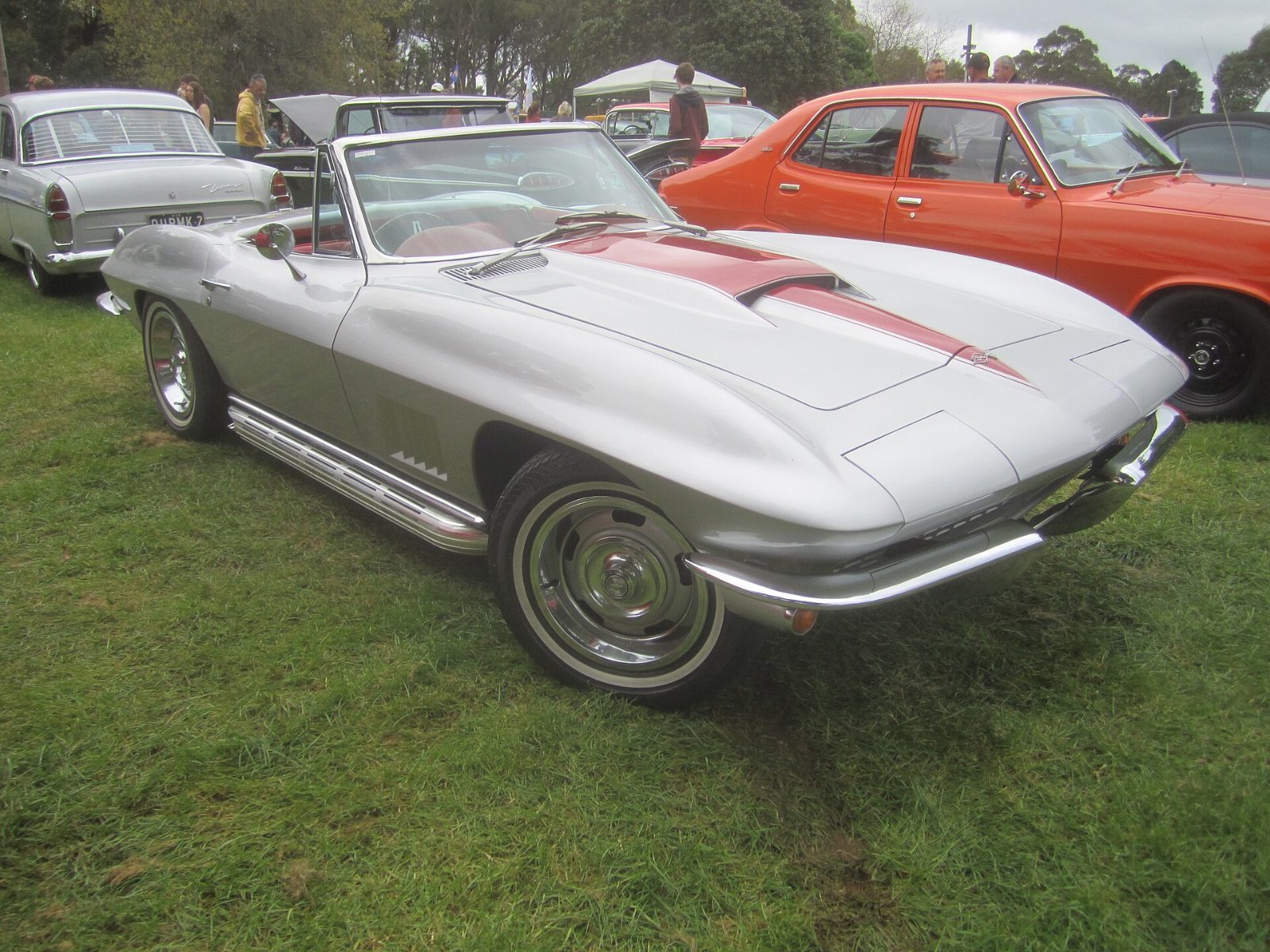
Convertibles with the original, factory-correct removable hardtop are especially attractive. Hardtops are valuable on their own, so check that the one included with a car is genuine and fits properly.
For a Gulf owner, a C2 convertible with its hardtop is really two cars: open in winter, closed and protected in summer.
Engines and what they mean for value
Small-block 327 cars are the most common and the easiest to live with. Fuel-injected cars are more collectable but need specialist knowledge to keep in tune. The big-block 396 and 427 cars deliver tremendous torque and carry higher values, while the L88 is in a category of its own and needs expert authentication.
Buying a C2 convertible in the UAE
Classic Corvettes reach the UAE mainly through imports from the United States and through private sales between collectors. If you import, budget for shipping, customs duty, inspection and registration. Values vary enormously between a driver-quality small-block car and a documented big-block, so price guides should only be a starting point.
Inspection checklist
- Frame: look for rust, repairs and accident damage.
- Birdcage: the steel structure inside the body around the doors and windscreen can corrode, and repairs are expensive.
- Numbers: compare engine, gearbox and rear axle codes with the VIN and expected dates.
- Soft top mechanism: check the frame, the storage lid and its latches.
- Hardtop: confirm it is original and that the seals are in good shape.
- Paperwork: build information, past ownership and restoration records.
A pre-purchase inspection by a Corvette specialist is strongly recommended. The National Corvette Restorers Society publishes judging standards that help explain what correct looks like.
Protecting a classic convertible in the Gulf
- Store the car in a covered, ideally air-conditioned, garage.
- Use the hardtop in summer to protect the interior from UV.
- Treat the soft top and seals regularly so they do not dry out and crack.
- Upgrade cooling discreetly if you plan to drive in warmer months, keeping original parts.
Running costs
A C2 convertible is not expensive to run day to day compared with a modern supercar, but specialist restoration and parts can be costly, and insurance for a valuable classic needs an agreed-value policy. Our Corvette ownership cost calculator helps you plan storage, insurance and maintenance in AED. For context on where the C2 sits in Corvette history, see Corvette generations compared.
Driving a C2 convertible today
On the road, a C2 feels light, direct and mechanical compared with any modern Corvette. Steering is slower and heavier at parking speeds unless power steering was fitted, and early drum-braked cars need more planning when stopping. Cars from 1965 onwards, with four-wheel discs, are noticeably easier in traffic. The cabin is narrow and there is no modern safety equipment beyond lap belts on most cars, so many owners treat their C2 as a weekend and event car rather than a daily driver.
In the UAE, the best driving season runs from roughly November to March. Early-morning runs along coastal roads or club drives organised by local classic car groups are the most enjoyable way to use the car while keeping heat stress low.
Frequently asked questions
What years were C2 Corvette convertibles made?
From 1963 to 1967, the full run of the C2 generation.
Were more C2 convertibles or coupes built?
More convertibles were built than coupes in each year of the C2 generation.
Did the C2 convertible come with a hardtop?
A removable hardtop was available as an option. Cars with an original hardtop are especially desirable.
Which C2 year is best?
It depends on taste. Many collectors prefer 1965 to 1967 for four-wheel disc brakes and refinements, while 1963 is valued as the first year.
Sources: National Corvette Museum, NCRS, Chevrolet Corvette
Last reviewed: 2026-11-25.