
The 1974 Corvette is the first C3 with body-coloured urethane bumpers at both ends, the last Corvette with a true dual exhaust before catalytic converters arrived for 1975, and the last year of the 454 big-block V8. That combination of the new look and the final old-school powertrain options makes it a turning point in Corvette history and a popular choice for buyers who want a big-block C3 without chrome-bumper prices.
In this guide
A year of change
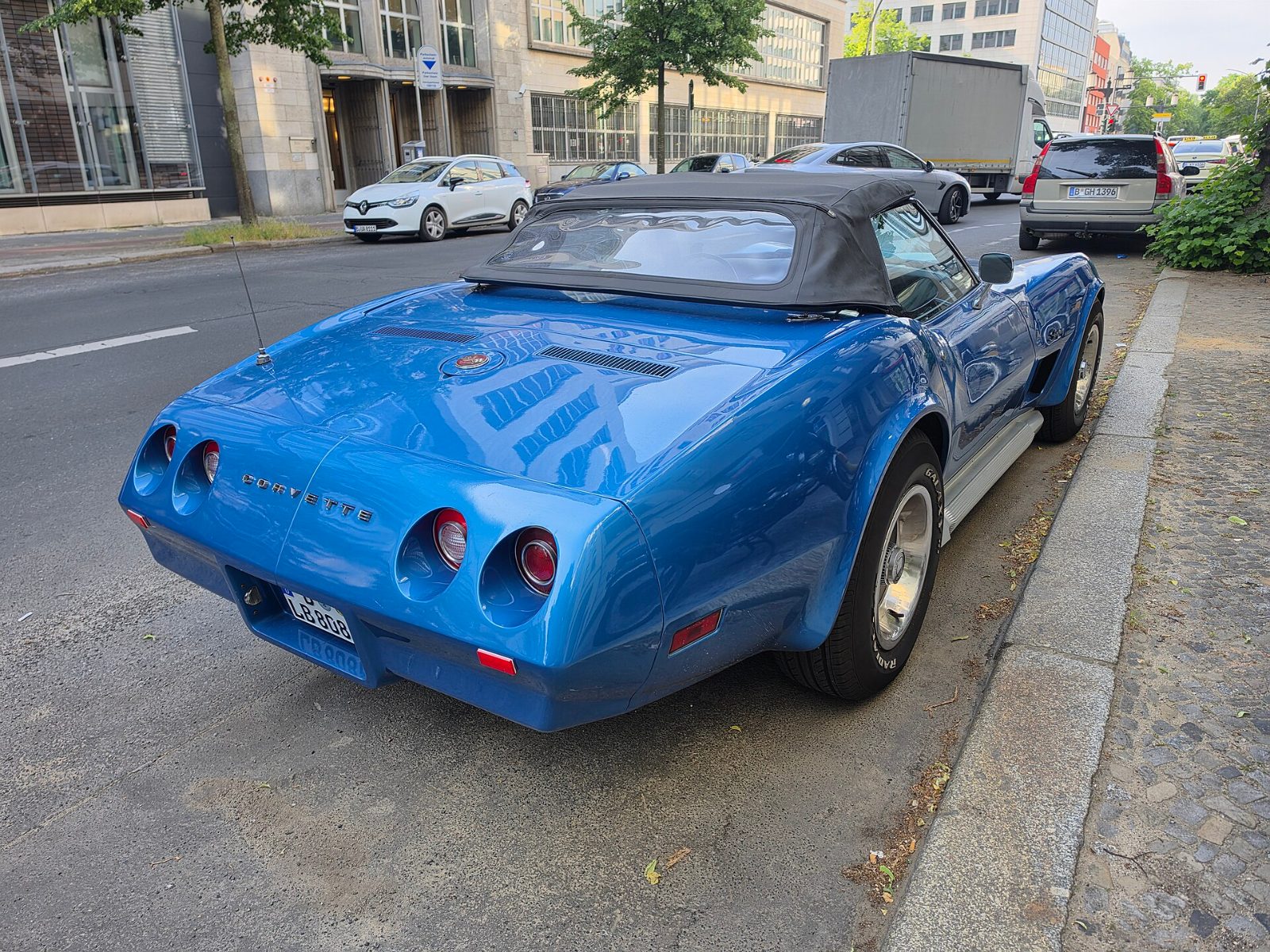
US federal safety rules introduced in the early 1970s required bumpers to absorb low-speed impacts without damage. Chevrolet responded with a urethane-covered front end for 1973, while keeping a chrome rear bumper. For 1974 the rear received a matching urethane cover, giving the C3 the smooth, rounded look it would keep until 1982. Early 1974 rear covers were made in two pieces with a seam in the middle; later C3s used a one-piece design.
At the same time, emissions rules were tightening. The 1974 model was the last before catalytic converters became standard, which meant it kept a free-flowing dual exhaust system. It was also the last year Chevrolet offered a big-block engine in the Corvette until much later.
1974 Corvette at a glance
- Urethane bumper covers front and rear, rear cover in two halves
- Last year of true dual exhaust without catalytic converters
- Last year of the LS4 454 big-block option
- Base L48 350 and higher-output L82 350 small-blocks
- Coupe with T-tops and convertible
Engines and gearboxes
Three engines were available. The base L48 350 small-block, the L82 high-output 350 with better heads and a more aggressive camshaft, and the LS4 454 big-block. Power ratings were in SAE net terms and modest compared with the late 1960s, but the 454 delivered strong torque and a distinctive feel.
| Engine | Type | Character | Notes |
|---|---|---|---|
| L48 350 | Small-block V8 | Smooth, economical by V8 standards | Most common |
| L82 350 | High-output small-block | Livelier, revs higher | Desirable for drivers |
| LS4 454 | Big-block V8 | Big torque, heavier front end | Final year of the big-block |
Gearboxes included four-speed manuals and the Turbo Hydra-Matic automatic. In the UAE, an automatic is the comfortable everyday choice, but four-speed cars attract enthusiasts.
Coupe or convertible
The convertible was still offered in 1974 and would be dropped after 1975, not returning until the C4. Convertibles are generally more valuable, especially with the big-block. The T-top coupe offers a semi-open experience and more rigidity. For UAE summers, a coupe with working air conditioning is the more practical choice.
What to look for when buying
The bumpers
Original 1974 urethane covers age, crack and fade. Many cars have reproduction covers. Check fitment and paint match. The two-piece rear cover with its centre seam is a distinguishing feature.
Exhaust and engine
Because 1974 was the last year of true dual exhaust, many owners value an original system. Look for leaks, cracked manifolds and correct pipes.
Frame and birdcage
The C3 frame and birdcage are prone to rust. Inspect frame rails, rear kick-ups and the windscreen frame.
Cooling
Big-block cars run hot in traffic if the cooling system is tired. Check the radiator, fan clutch and shroud.
Electrics and vacuum
Pop-up headlights and the wiper door use vacuum actuators. Test them and listen for hissing leaks.
Numbers and big-block claims
Some small-block cars have been converted to big-block engines over the years. Check engine stamping and documentation if you are paying a premium for a factory 454.
Living with a 1974 Corvette in the UAE
As with all imported classics, check the title, export and customs records, and confirm that the VIN matches the UAE registration. Ask your emirate’s traffic authority about classic registration and inspection before buying.
Cooling and air conditioning are the priorities for local use. Upgrade the radiator if needed, keep fans in good order and recharge the air conditioning. Store the car under cover: urethane bumpers and the interior suffer in UV light. Our ownership cost calculator gives a starting budget for insurance, fuel and maintenance. The generation comparison shows how the 1974 fits within the long C3 run.
Making it more drivable
Modern radial tyres, a rebuilt steering box, fresh bushings and properly adjusted brakes make a big difference. Electronic ignition upgrades are common and reversible. Keep original parts if you change them, because originality affects value.
Fuel and the big-block
The 1974 454 used lower compression than the late-1960s big-blocks and was designed for lower-octane fuel, so it usually copes with modern premium unleaded better than older high-compression engines. Still, have the timing checked and listen for pinging under load on hot days.
Why the 1974 still appeals
The 1974 Corvette offers the full-urethane C3 look with the last of the big-block and true dual exhaust options. For buyers who prefer the cleaner later bodywork or who want big-block torque without paying for a 1960s car, it is a logical pick.
The 1974 Corvette is the last big-block, true-dual-exhaust C3, and the first with soft bumpers at both ends.
Frequently asked questions
Why is the 1974 Corvette rear bumper split in the middle?
The 1974 rear urethane cover was made in two pieces with a centre seam. Later years used a one-piece cover.
Was 1974 the last big-block Corvette?
It was the last year of the 454 in the C3. Later Corvettes used different large-displacement engines, but not the classic big-block design.
Did the 1974 Corvette have a catalytic converter?
No. Catalytic converters became standard for 1975.
Is a 1974 Corvette a good classic to drive in the UAE?
With a healthy cooling system and air conditioning, it can be pleasant in cooler months. Summer use is harder on the car.
Sources: National Corvette Museum, National Corvette Restorers Society, Chevrolet Corvette (official)
Last reviewed: 2026-11-25.